
The Observational Classroom: Why In-Person Immersion Matters in the Age of AI
Jason Pang
Lead Data Scientist · Dec 8, 2025
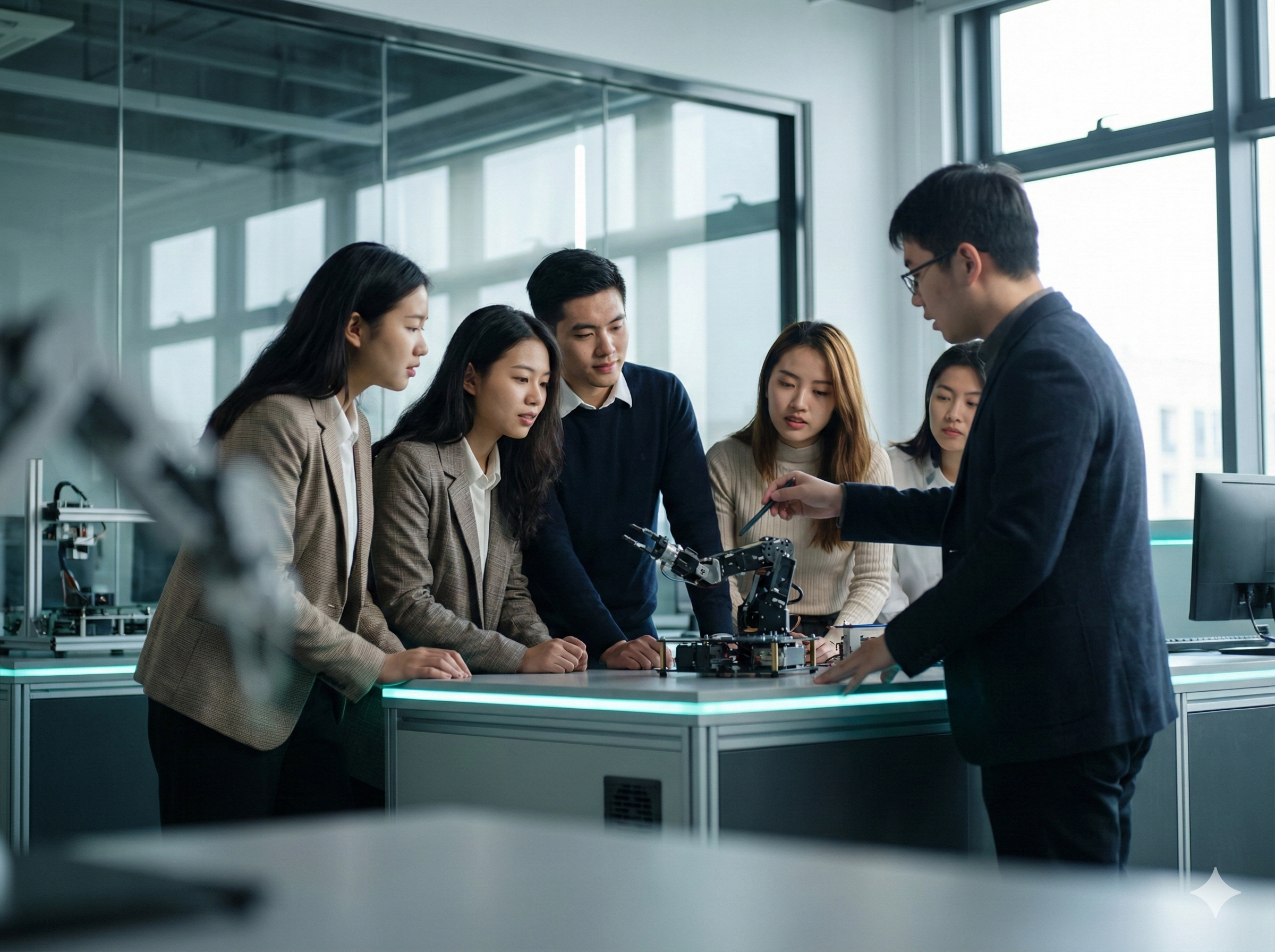
Image source: BridgEdu Global Archives
The Commoditization of Knowledge
In a world where GPT-4 can draft a syllabus in seconds and explain quantum physics in a haiku, information accessibility has fundamentally changed.
For decades, higher education and study tours sold access to information. You went to Silicon Valley to hear what a Google engineer knew. Today, you can ask an AI agent to simulate that engineer.
So, what is left for the physical classroom? The answer lies in Tacit Knowledge (implicit know-how) and Contextual Observation.
“AI gives us answers, but physical immersion gives us the questions that matter.”
Why “In-the-Wild” Learning Data is the New Gold
At BridgEdu Global, we argue that the future of education isn’t about content consumption—it’s about behavioral calibration.
When students visit a robotics factory in Osaka or a fintech sandbox in Singapore, they aren’t just learning “how it works.” They are observing:
- Cultural Nuance: How Japanese engineers treat their tools with reverence.
- Systemic Friction: The messy reality of deploying code in legacy banking systems.
- Human Dynamics: How innovation teams actually collaborate under pressure.
These are data points that no LLM can currently hallucinate with 100% fidelity.
The BridgEdu Methodology: Data-Driven Immersion
Our curriculum is designed to capture these “in-the-wild” signals. Unlike traditional agencies that focus on sightseeing, we focus on Cognitive Outcomes.
1. Pre-Trip: Hypothesis Generation
Before boarding the plane, students use AI tools to research the companies they will visit, generating hypotheses about their business models.
2. On-Site: Empirical Verification
During the visit, students act as “Field Researchers.” They are tasked with validating their AI-generated hypotheses against ground truth.
3. Post-Trip: Synthesis & Publication
We don’t just write essays. We publish Data Insight Reports, contributing to the broader academic discourse on how AI is reshaping industries.
Conclusion
We believe the future of study tours lies in “Academic Field Research” rather than traditional tourism. Institutions that recognize this shift may better prepare leaders who don’t just use AI, but understand the complex human world that AI attempts to model.
Ready to integrate these insights?
We help institutions design curriculum based on the methodologies discussed in this article. Schedule a briefing with our research team.